

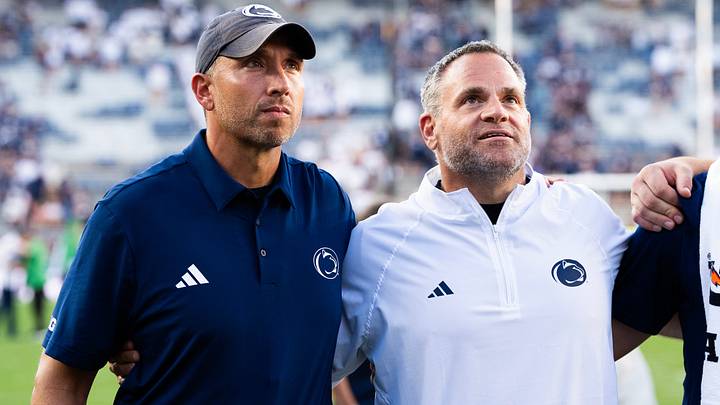
In August of 2024, two years into his tenure after leaving Temple, Penn State gave athletic director Pat Kraft a contract extension through the 2031-32 academic year. The contract pays him an average of $2.26 million.
If the football program continues on its current trajectory after a 25-24 Week 12 loss to Rutgers, the first loss to the Scarlet Knights since 1988, that contract could become a new line-item expense for the Penn State athletic department as the university’s administration searches for new leadership.
There’s no guarantee a move gets made on an athletic director who has inherited and helped maintain a wrestling dynasty under Cael Sanderson and has overseen a women’s volleyball national championship in 2024. However, at a football school like Penn State, Kraft could be held accountable for the Matt Campbell mess that he had a huge hand in creating.
Money remaining on Pat Kraft’s contract if he’s fired
- $11.2 million for the 5 years from 2027-28 to 2031-32
The university would be on the hook for the remaining guaranteed portions of Kraft’s deal. Assuming that’s just the years beyond 2026-27, that’s the final five years of his eight-year deal.
It would be a bit of a complicated situation, as the university is in the midst of a $700 million renovation of Beaver Stadium, which Kraft spearheaded, and is looking to increase its NIL resources to remain competitive in the Big Ten. Paying two athletic directors doesn’t help put more money on the field.



Pat Kraft swung big and may have missed badly
Newly empowered, only 14 months later and after watching James Franklin lead the football program within one drive of the National Championship Game, Kraft fired Franklin and embarked on a messy, hubristic coaching search that left him empty-handed as the early signing period for the 2026 high school class came and went.
Kraft eventually landed on Matt Campbell, hiring the established head coach away from Iowa State on an eight-year $70.5 million contract, but not after whiffing publicly in his pursuit of BYU’s Kalani Sitake and giving Curt Cignetti, Matt Rhule, Eli Drinkwitz, and others leverage for a pay raise to stay put.
It was a crowded coaching carousel with LSU, Florida, Auburn, UCLA, and plenty of others seeking a new head man. Still, Penn State was the first to the carousel, firing Franklin just seven weeks into the year amid a 3-3 start, and yet it took 54 days to find a replacement.
Aside from being an embarrassing saga for the program, so publicly settling for a coach who wasn’t the first choice, Kraft left Campbell with an impossibly short runway to prepare for the transfer portal, a vital piece of a Year 1 turnaround for every program hiring a new coach in the NIL and portal era, and cost him a real recruiting class.
Campbell managed just 16 high school commits and imported 24 Iowa State transfers for his first Penn State roster. Even though it has become commonplace to bring players with you to a new team, 24 is an outlier number. For reference, Curt Cignetti brought eight James Madison transfers to Indiana.
The most optimistic view of Campbell is justified by Kraft’s mistakes, and the most pessimistic, as he’s off to a 6-5 start and just 3-5 in Big Ten play, believes Kraft made the ultimate mistake with the head coach he eventually hired. Neither is good for Kraft, whom much of the fanbase, either because they know Campbell won’t be going anywhere because of the contract Kraft handed him, or because they recognize the nuances of his situation, is pinning the blame for this season on.
Rising prices coinciding with the renovations to Beaver Stadium aren’t helping the relationship between Kraft and the fanbase either. The question now is: are any of those outside frustrations reflected in the decision-makers on the inside?
 Add us as a preferred source on Google