

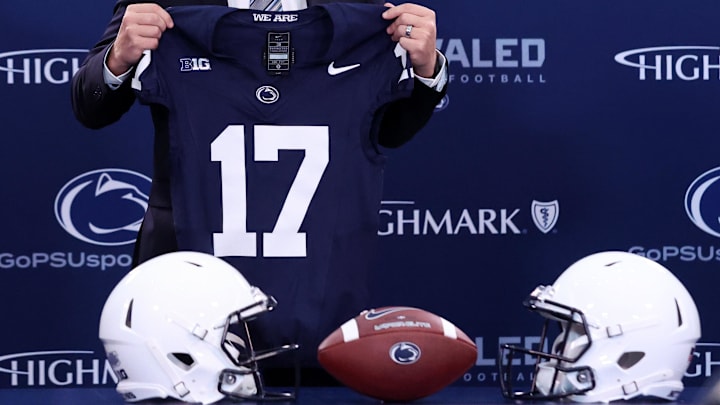
Penn State football is in for a completely new era from head coach Matt Campbell's first season to a nearly brand new roster to things as simple as patches on a jersey debuting. The Nittany Lions made a brand deal switch early in the 2025 regular season, swapping out Nike for Adidas. On Friday, Jan. 23, the NCAA Division I Cabinet approved of another change to football uniforms and equipment.
CBS Sports predicts Penn State's season-defining game for 2026
Effective Aug. 1, Division I teams can add up to two commercial logos or patches on uniforms or apparel. They can also add one commercial logo on equipment. This can be implemented through the preseason, regular season, and essentially any game except for NCAA championship events. Additional commercial logos can be added on uniforms and apparel for conference championships, according to the press release.
"College sports are in an exciting new era of increased financial benefits for student-athletes, and the Cabinet's vote today reflects the ongoing commitment of Division I members to drive additional revenues and fully fund those benefits. This also continues the NCAA's efforts to expand flexibility in areas of NCAA rules, thereby allowing schools and conferences to set standards that reflect their values and serve their unique needs. This important policy change is another step forward in advancing that philosophy and providing members with increased flexibility," athletics director at Illinois and chair of the Cabinet Josh Whitman said.
NEWS: Jersey sponsor patches are coming to college sports.
— Chris Vannini (@ChrisVannini) January 23, 2026
Up to two logos on jerseys, one on equipment. Not allowed in NCAA championship events.
The NCAA Division I Cabinet approved it today, effective Aug. 1. pic.twitter.com/ynkmh84BW5
NCAA Division I Cabinet approves additional commercial logos on college football jerseys, apparel, and equipment
The NCAA tried to "fix" college football over recent years with the College Football Playoff structure and the Transfer Portal, but issues and controversy still prevails. Questions remain over non-conference bowl games, the committee who chooses the top 12 teams for the CFP, and the CFP schedule that gave four teams about a month long break before playing again. Even adjustments to the regular season, like Week 0, could be made.
Instead, the NCAA shifted its focus to how to monetize college football even further, something almost objectively unimportant in comparison to everything else that needs some tweaking.
 Add us as a preferred source on Google